

co-parenting
A Read-Only Calendar for Co-Parenting When Communication Is Hard
Co-parenting after separation or divorce can be emotionally exhausting—even when everyone involved genuinely wants what’s best for the kids.
I know this firsthand. I’ve been in the position where simple, necessary messages about pickups or schedules turned into sarcastic, hostile, or deliberately provocative exchanges. Messages that should have been about logistics slowly became about control, blame, or reopening old wounds.
And in the middle of all of it were kids who just needed to be picked up on time.
This product exists because that experience is far too common.
When Communication Itself Becomes the Problem
In high-conflict or emotionally charged co-parenting situations, the challenge usually isn’t disagreement about responsibilities. It’s that communication itself becomes the source of stress.
A simple, neutral question like “What time does Suzy get out of daycare today?” can easily spiral into passive-aggressive replies, defensiveness, or arguments that have nothing to do with the actual question. Over time, parents may avoid communicating altogether—not because coordination isn’t necessary, but because every interaction carries an emotional cost.
That breakdown hurts everyone, especially the kids.
The Goal: Fewer Messages, Less Conflict
This tool was designed to act as a neutral intermediary.
It doesn’t interpret tone. It doesn’t escalate conflict. It doesn’t take sides. Instead, it quietly holds shared logistical information in one place so fewer questions ever need to be asked in the first place.
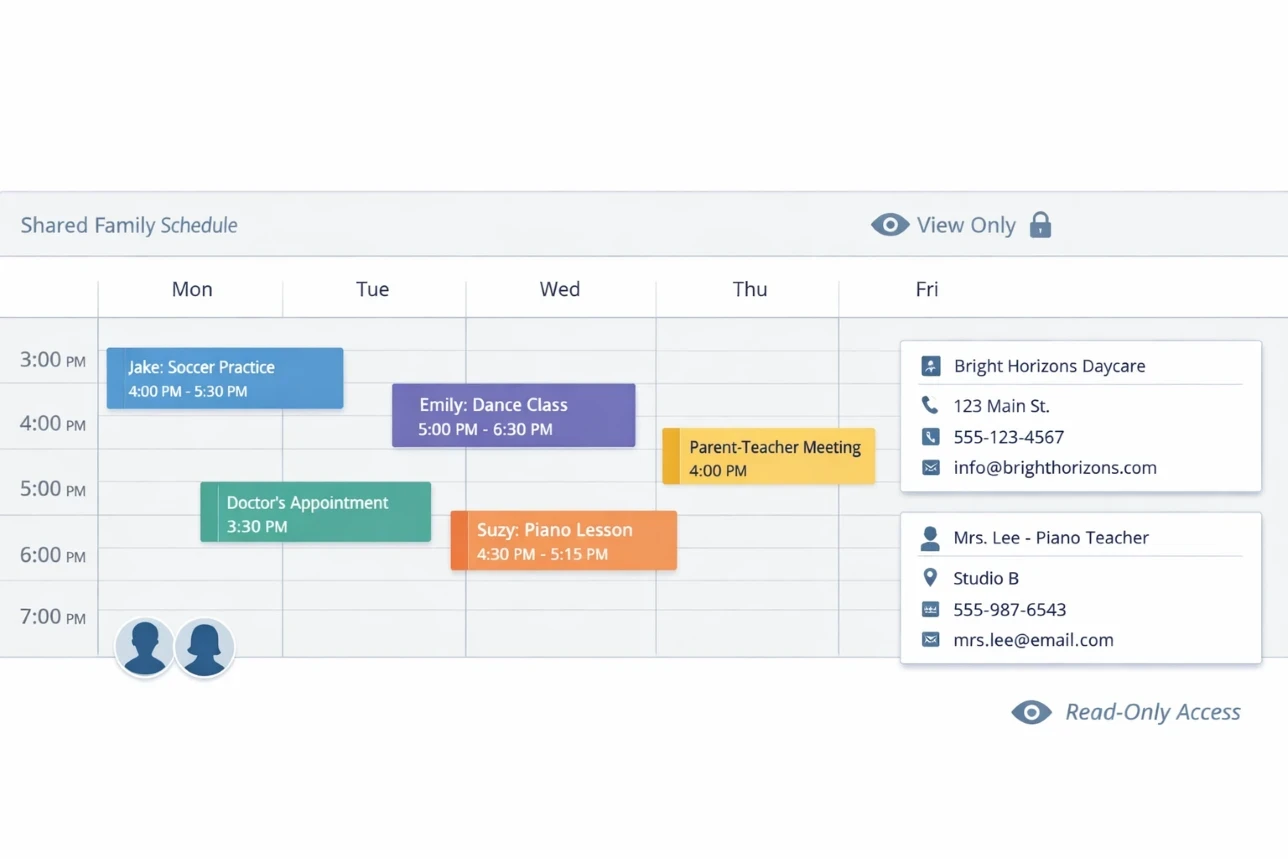
When both parents can clearly see where a child needs to be, when an event starts and ends, who is responsible, how long it lasts, and where it’s located, a large percentage of communication simply becomes unnecessary. Reducing that volume alone can dramatically lower stress.
Why Read-Only Access Matters
One of the most intentional design decisions was making read-only access a first-class feature.
In many co-parenting situations, shared edit access simply isn’t realistic. Changes can become a source of conflict, and even small edits raise questions about intent or control. When one parent maintains the schedule and the other parent can reliably view it, expectations are clear and disputes are minimized.
The calendar becomes a shared reference point rather than another battleground.
Clear Responsibility Without Guessing
Ambiguity causes friction. This system avoids vague events by making responsibility explicit.
Instead of a generic “Dance practice tonight,” events clearly communicate who the event is for, which day it occurs, how long it lasts, and whether a pickup or drop-off is required. When responsibilities are visible at a glance, there’s far less room for assumptions, missed handoffs, or last-minute arguments.
Contacts Without Interrogation
Another common breakdown happens around contact information.
Rather than repeatedly asking which daycare, which school entrance, or who to call if someone is running late, this system stores structured contact details alongside events. Names, roles, addresses, phone numbers, and simple logistical notes are available when needed, without forcing another message or reopening a tense conversation.
This is strictly about coordination—no personal or sensitive records—just practical information that helps things run smoothly.
Works With or Without Google Calendar
Not every parent wants to fully share their personal calendar, and that’s reasonable.
This system allows selective visibility. Specific Google Calendars can be shared without exposing unrelated personal events, or schedules can be managed entirely within this system without any Google integration at all. Shared visibility exists only where it’s relevant to shared responsibilities.
Built for Real Life
Real life doesn’t follow perfect schedules.
People get stuck at work. Activities are canceled for one week only. Plans change without warning. This system supports recurring events while still allowing individual instances to be modified or canceled, so the schedule reflects reality instead of forcing constant explanations.
Ideally, the only message that still needs to be sent is something simple and human, like: “I’m stuck at work—can you pick up Suzy today?”
Extended Family Without Confusion
Coordination often extends beyond parents.
Grandparents or other trusted adults may occasionally need to help with pickups or drop-offs. Read-only access allows them to see exactly where a child needs to be without requiring long explanations or exposing private calendars. The right information is available at the right time, and nothing more.
What This Tool Is — and Isn’t
This tool is not a relationship fixer, a communication platform, or a replacement for custody agreements.
It is a neutral coordination layer designed to reduce emotionally damaging communication by removing ambiguity. By minimizing unnecessary interaction and clearly answering logistical questions, it helps protect everyone’s emotional bandwidth—especially the kids’.
Sometimes the most helpful thing a system can do is simply make fewer conversations necessary.