

family coordination
Why I Built ComingUp.today
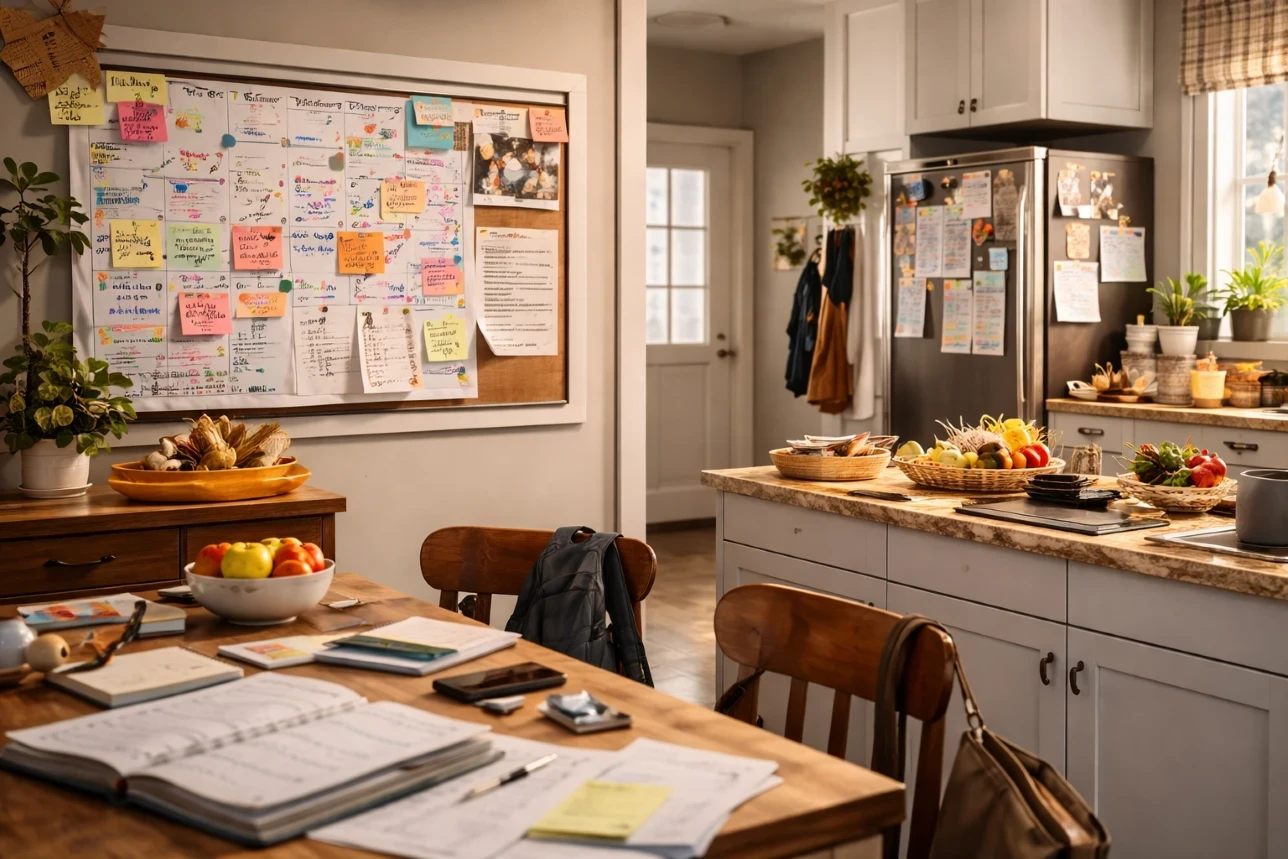
I didn’t set out to build a product. I was trying to solve a very practical problem in my own home.
I have a wife and three children. Our kids are homeschooled, which means our schedule doesn’t revolve around a single school calendar. Instead, it’s made up of many smaller commitments spread throughout the week and month — homeschool group activities, dance lessons, music, and other classes, often at different locations and times.
On top of that, my wife and I each have our own responsibilities and commitments. Individually, none of this is unusual. Together, it adds up quickly.
The wall calendar idea
At one point, my wife found a digital wall calendar she liked while browsing online and at Costco. The idea made sense: put something in the kitchen that everyone could see, and the schedule would become easier to manage.
When we looked more closely, though, the options fell short. The screens were small. Most weren’t touch-enabled. Many simply mirrored a Google Calendar with a nicer frame. Others ran proprietary software on locked-down hardware and required subscriptions on top of the initial cost.
They weren’t bad products — they just weren’t what we needed.
What bothered me most was that they didn’t actually solve the underlying problem. They showed dates and times, but not context. And they tied the solution to a single piece of hardware that, if it broke, would need to be replaced entirely.
The problem wasn’t visibility — it was context
What I wanted wasn’t just to know that something was happening. I needed to know where it was happening, which child it involved, and what information I might need in the moment.
For example, my daughter has dance lessons, and there are two studios with nearly the same name located about the same distance from our home. If I suddenly needed to take her to class, I wanted to know exactly which location it was, the address, and a phone number — without texting someone or digging through old messages.
And I wanted that information available everywhere: on my phone, on my computer, and on a shared screen in the kitchen.
Hardware shouldn’t be the product
Another issue with the wall calendar approach was hardware lock-in. Spending hundreds of dollars on a proprietary screen that could only do one thing didn’t make sense to me.
What I actually wanted was flexibility. Any device with a browser should work. A Windows computer. A Linux mini PC. A Raspberry Pi. A touchscreen monitor mounted in the kitchen. If something broke, replacing it should be easy and inexpensive.
The system should live on the web, not inside a single piece of hardware.
Building something that fit real life
Once I started framing the problem this way, it became clear that what we needed went beyond a shared calendar.
We needed a way for multiple people to log in and see what was coming up. We needed to tag events by person, so we could quickly filter the day by child or responsibility. We needed to store contacts — like dance studios — once, with all the relevant information attached, instead of re-entering it every time.
We also needed support for children who don’t have email addresses. Our kids shouldn’t need accounts just to appear on a schedule.
And beyond scheduling, there were other everyday coordination problems that kept coming up: recurring reminders, daily checklists, chores, schoolwork, and routines that needed to be tracked without constant verbal check-ins.
If you’re curious how this is structured day to day, there’s a simple overview of how it works in practice.
More than a calendar
Over time, the scope expanded naturally. Shared notes that work everywhere. Grocery lists that everyone can add to, so trips to the store don’t rely on memory or screenshots. Recipes we use regularly, saved in one place. Reminders that repeat because life repeats.
None of this is revolutionary on its own. The difference is having it all available in one place, on any device, without forcing everyone into the same ecosystem.
Why this still doesn’t feel solved elsewhere
I spent a long time looking for something that already did this well. There are many good tools — calendars, task managers, note apps — but most are built for individual productivity or single platforms.
What I couldn’t find was something designed specifically for shared awareness in a household or small group, where visibility matters more than control and context matters more than features. Many of the same questions come up repeatedly, which is why I’ve tried to answer the most common ones in the FAQ.
That gap is why I built ComingUp.today.
Not because the world needed another app, but because our family needed something that fit the way we actually live.