

homeschooling
How Homeschooling and Remote Work Blur the Lines Between Roles
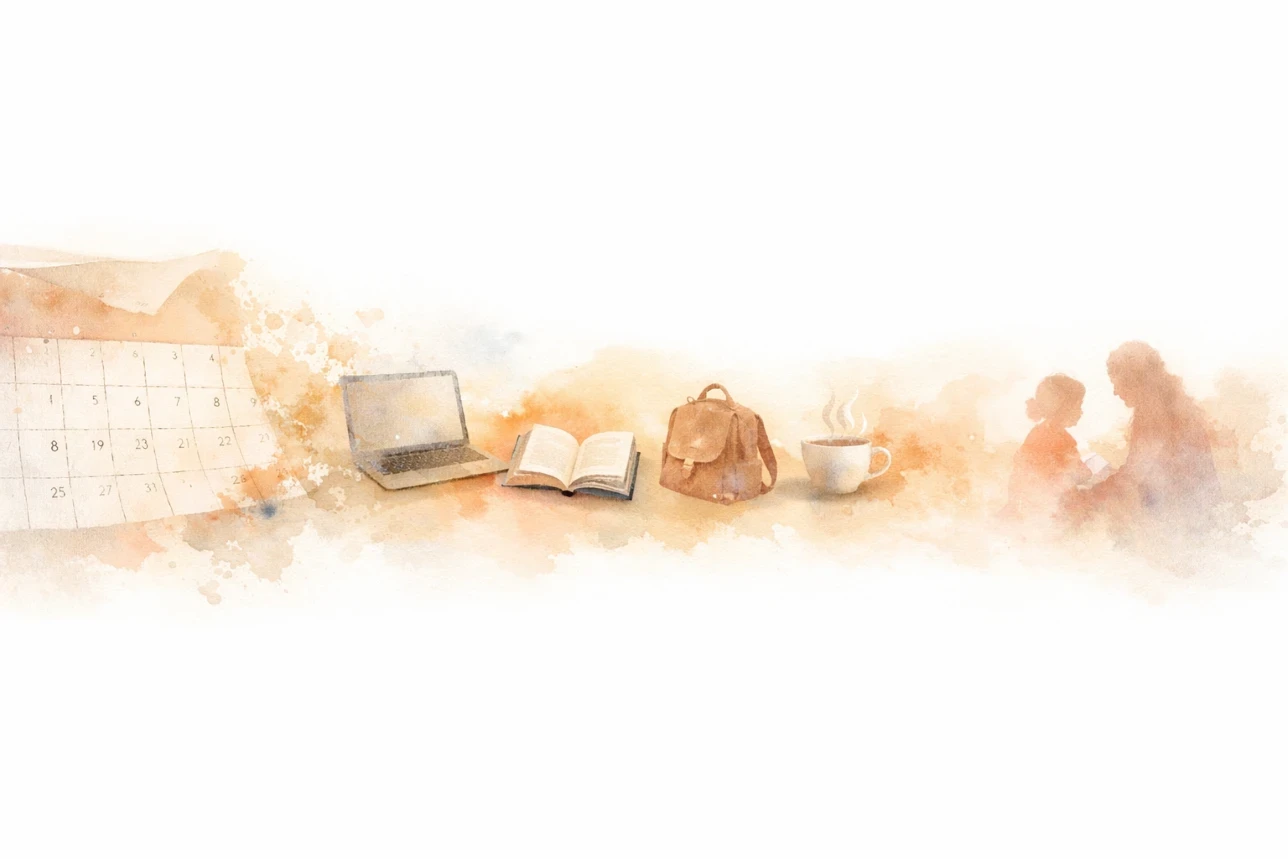
There’s a moment many families know well: an email notification arrives at the same time a child calls out for help with a lesson. You pause your own work. You move between roles — worker, parent, teacher — without any external signal. What feels like a boundary in theory dissolves into an imperceptible ebb and flow in practice.
This blending of roles isn’t just practical — it reshapes how people think about time, presence, and responsibility. When homeschooling and remote work occur in the same household, they don’t merely coexist — they collide, overlap, and reconfigure each other.
Throughout the pandemic, parents across the world found themselves doing precisely this. Parents who suddenly worked from home also took on supervision of their children’s remote schooling, leading many to reflect on how work and family life interact on a deeper level than before.
The Myth of Separate Roles
In the standard narrative, we talk about roles as neatly compartmentalized:
- The worker from 9 to 5
- The parent before and after work hours
- The teacher during school time
But when those schedules occur in the same physical space without clear transitions, these compartments blur. A meeting might run overtime, and suddenly you’re the teacher shepherding a math lesson in the margins. A child’s question during a focused task might mean pausing your own work and stepping into the parent role. Life becomes a continuum, not a ladder of neatly ordered boxes.
This isn’t always a long-standing intentional choice — for many, it emerged because remote work became more common, and homeschooling families gravitated toward models that fit into their family rhythms. This pattern shows up in broader coordination challenges too — particularly in contexts where calendars and expectations used to help separate roles. That dynamic is something I explored more in Why Shared Calendars Break Down for Families (And Small Groups).
Time, Attention, and the Body
One of the unseen costs of blended roles is the mental and physical load it imposes. Remote work already demands constant negotiation between focus and interruption; children’s learning demands shared attention; and parenting requires emotional presence. When all three occur in overlapping spaces, each fragment of attention becomes precious.
Research on remote instruction and parental experience suggests that family schedules and expectations shifted dramatically in recent years, especially when formal schooling and professional work occurred in shared spaces.
People report that the hardest part isn’t just doing the tasks — it’s managing the shifting expectations. This is an example of coordination friction and the kinds of context loss that come up when boundaries blur. I discussed this phenomenon more in Every Problem Is a Communication Problem.
- When do you switch from one role to another?
- How do you honor the boundaries you thought existed?
- What happens to your sense of productivity when interruptions are constant?
This isn’t just organizational friction — it’s a transformation in how we perceive time and responsibility.
The Emotional Landscape of Blended Roles
Parents who balance remote work and homeschooling often describe the experience as both rewarding and exhausting. In online communities, many speak of juggling priorities and the tension between long-term family goals and immediate obligations.
There’s a paradox here: you might love the time you spend with your child, yet miss the uninterrupted focus you once had for your professional work. The roles aren’t merely tasks — they’re identities. When these identities intersect, the emotional terrain changes.
Some days feel like a symphony of rhythm and flow; others feel like a series of urgent switches between modes of care, instruction, and responsibility. Recognizing this complex emotional experience is a step toward understanding why blended roles feel so challenging — and why they also feel meaningful.
Beyond Tools: What Blended Role Life Reveals
Most discussions about scheduling focus on how to manage. But understanding blended roles requires asking deeper questions:
- What does it mean to be present in multiple ways?
- How do we honor both work commitments and family relationships?
- Can schedules be structured in a way that supports relationships instead of fragmenting them?
These questions point to something fundamental: modern life no longer assumes a rigid separation between different aspects of life. Instead, it demands a fluid capacity to navigate and integrate responsibilities.
This shift reveals a deeper truth about human life in households where homeschooling and remote work are both realities. Families in these situations have many overlapping commitments — and that’s exactly why support for shared visibility and understanding rhythms matters, whether in day-to-day coordination or in the complex households and families use case.
The challenge isn’t just where to put an event on a calendar — it’s how to live in a way that respects connection, purpose, and daily life rhythms.
Conclusion: Seeing Roles as Relationships
When roles blur, it’s easy to feel overwhelmed. But there’s another side to this story. Blended roles can also deepen relational richness. They allow for unexpected moments — a shared curiosity during a lesson, a child’s pride in solving a problem, or a partner’s laughter from the next room.
These aren’t interruptions — they’re reflections of life itself, lived fully rather than in fragments.
This is a different way of relating to time and responsibility — one that honors presence over perfection, conversation over compartmentalization.
The boundaries between work and homeschooling aren’t lines to be drawn.
They are rhythms to be understood and lived.